
News

MiAlgae lands £2.5 million for Grangemouth plant
Scottish biotech company MiAlgae has secured a £2.5m investment from the Scottish National Investment Bank. This funding is allocated to support the company’s new commercial-scale production facility located in Grangemouth, with the announcement made on 6 October 2026.
Source: Scottish Business News
New AI-powered platform could help scientists in Scotland make cancer breakthrough
A new AI-powered imaging platform that looks deep into the configuration of cells is set to help scientists in Scotland carry out cutting-edge research into cancer and other diseases.
Heriot-Watt University has secured £449,000 from the Wolfson Foundation to bring a new system to the Edinburgh Super-Resolution Imaging Consortium (ESRIC), a national imaging facility used by researchers across Scotland.
Source: FUTURESCOT
Why universities are the glue uniting talent, industry and patient need
Universities have a unique role to play in accelerating health technologies out of the lab and into the hands of the clinicians and patients who really need them. But while Scotland continues to lead the way on innovation, change is urgently needed to accelerate pathways to clinical adoption.
Source: The Scotsman
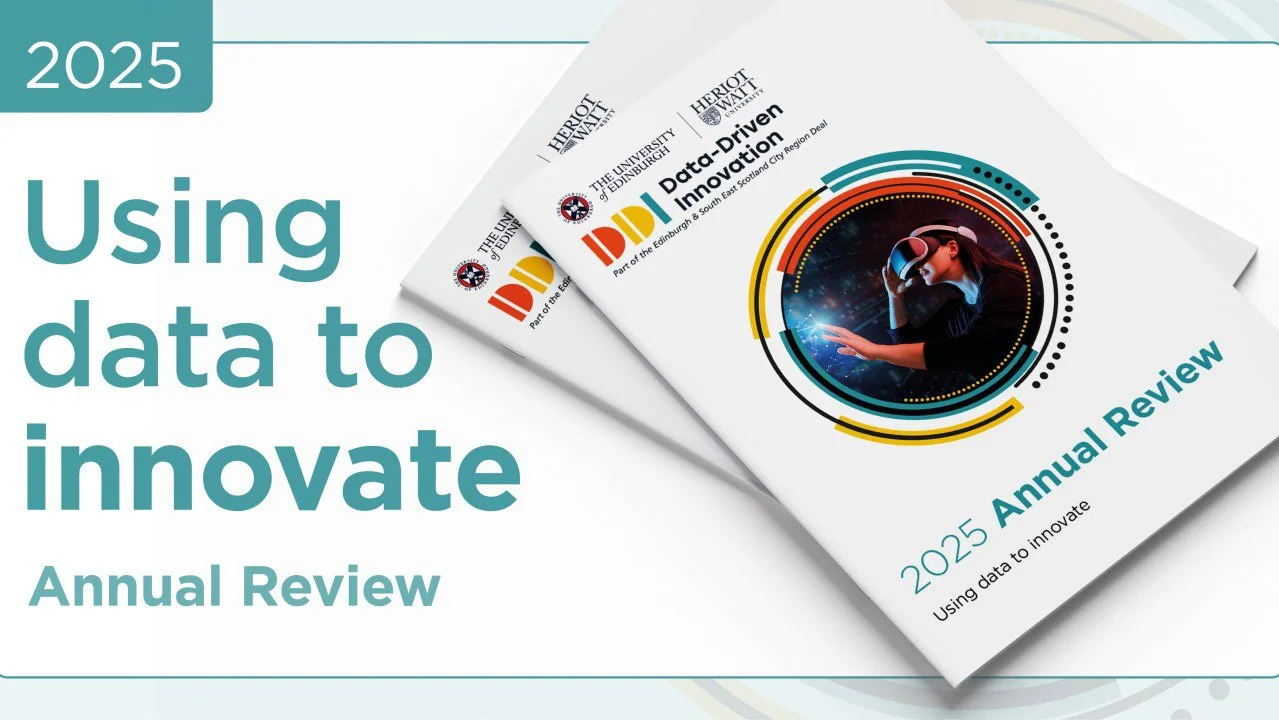
DDI programme publishes latest annual report
The University of Edinburgh and Heriot-Watt University’s Data-Driven Innovation (DDI) initiative has published its latest Annual Review, highlighting achievements from the academic year 2024-25.
Twelve case studies feature in the review, covering start-ups and spin-outs, research, and partnerships delivering positive impacts for a range of industry sectors.
'Revolutionary' skin sensor could change how eczema is treated
For years, people living with eczema have endured endless trial-and-error treatments and long waiting lists to see a dermatologist.
Now, scientists at Heriot-Watt University believe they’ve developed “ground-breaking technology” that could revolutionise how the condition is diagnosed and treated.
Source: STV
Scots AI Device Targets Skin Cancer Delays In Remote Areas
A Scottish researcher at Edinburgh’s Heriot-Watt University has led the development of a new AI tool that could transform skin cancer care for patients living in remote areas by allowing for fast and potentially life-saving diagnoses.
Source: DIGIT
Heriot-Watt aims to raise £35 million for new brewing and distilling centre
Edinburgh’s Heriot-Watt University is seeking to raise £35m in order to realise its vision of building a new Centre for Sustainable Brewing and Distilling (CSBD).
Source: Business Insider

New test uses oyster poo to track devastating parasite
A Heriot-Watt scientist has worked with colleagues at the University of Edinburgh's Roslin Institute to develop a groundbreaking method to detect a deadly oyster parasite without harming the shellfish.
The European flat oyster (Ostrea edulis) has seen its numbers plummet over the past two centuries due to overfishing, habitat loss and disease. They are now rare and protected in the wild.
Heriot-Watt launches spin-out detecting bugs in water supplies
Technology to improve the safety of public water supplies by improving the detection of waterborne pathogens has been developed by scientists at Heriot-Watt University.
Now they are setting up a spin-out company, Aquazoa, to take their system to market, and expect to commercialise the product in early 2026.
Source: Business Insider